Showing posts with label Summer Enrichment. Show all posts

Wednesday, July 27, 2016

Youth Voice: Make the Wilson Building Work for You(th)

This week, we're sharing the perspective of Henry Eisler, a youth participant in Mikva Challenge DC who is spending his summer writing a blog to elevate the voices of DC youth and inspire them to play an active role in the District's political system. We thank Henry and Mikva Challenge DC for their contribution to this blog!

There is a building on Pennsylvania Avenue that influences the life of every young person living in Washington, DC every day. In this building, elected officials govern, pass legislation, and make monumental decisions that determine the way the entire city functions. This building, despite what you may have been thinking, is not the White House; this is the John A. Wilson building, home to the City Council of the District of Columbia. This City Council is a group of accomplished men and women who craft and pass the laws and regulations that determine the manner in which the city operates and its residents may act. 


Introduction to the Work of the Council

As the DC City Council quickly works to finalize a budget for the new term (Fall 2016), their focus is beginning to shift towards an improved education platform that will have positive effects on young people across the city. The Council’s Committee on Education, chaired by Councilman David Grosso, has been increasingly pushing the addition of education reforms to the 2017 budget deal. These reforms primarily aim to expand school reading and library projects, support nutritional health and on-campus medical aid programs, and lower rates of truancy in schools throughout the District.

Wednesday, August 05, 2015

Making the Most of My Summer with AALEAD!

This blog post was written by a District of Columbia youth, Ellen, who has been an active participant with Asian American LEAD for over ten years.  Asian American LEAD (AALEAD) is a regional non-profit organization that supports low-income and under-served Asian Pacific American youth with educational empowerment, identity development and leadership opportunities through after school, summer, and mentoring programs.  Ellen is a rising 10th grade student at School Without Walls High School in Washington, D.C.  

While many other youth around the nation are spending their summer break enjoying activities such as swimming, vacationing, attending camps, visiting relatives, or playing sports with their friends, I have chosen to spend my summer working for an organization that is very important to me, called Asian American LEAD.  Many times people ask me, “What does AALEAD mean to you?” I often reply that AALEAD is like my second family. From the time that I started participating in AALEAD in kindergarten until high school, I have had many experiences with AALEAD that have helped shape me into who I am today. There have been a lot of inspirational figures in AALEAD who have left a mark in my life.  They have also inspired me to do the same for my fellow AALEADers.
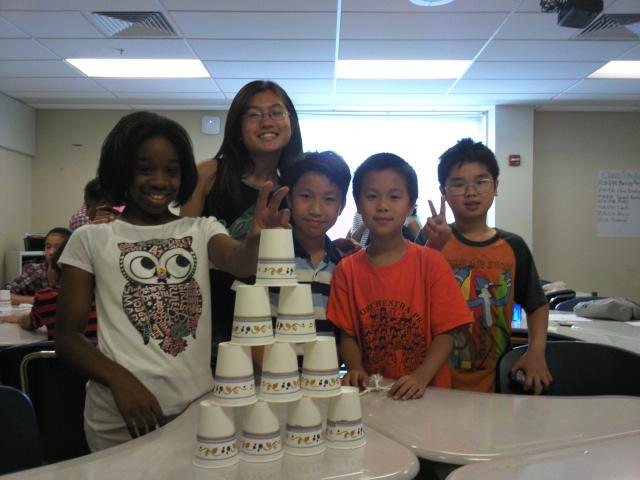
C:\Users\郭津津(Ellen Guo)\Pictures\AALEAD\Photo0501.jpgThis brings me to the topic of this summer and why I decided to work with AALEAD. The primary reason is that I want to help younger youth in the program and provide them with opportunities similar to what I had when I was their age. Going through my childhood memories, one of the most delightful and inspirational memories I had was spending time with the high school students in AALEAD.  While I was in elementary school, I took advantage of the many workshops and activities the high school students led for me, which I always found to be very fun and engaging.  


I personally think this summer program has been a great advantage for the younger youth in AALEAD because although I had experience with high school youth and their workshops, they didn’t cover the topic of transition from elementary school to middle school. As the oldest sibling in my family of three children, I wish I had people who went through the experience before me who could tell me what to expect. Since I wasn’t able to get this knowledge when I was transitioning from elementary school, I wanted to give back to those after me so that they could have this type of benefit.

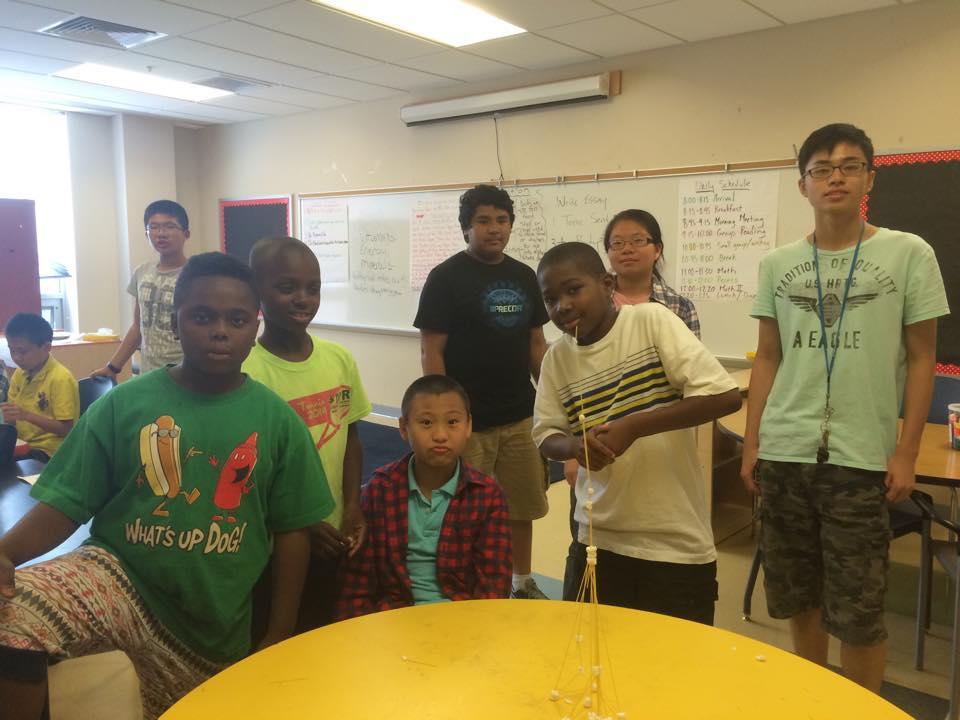
C:\Users\郭津津(Ellen Guo)\Pictures\AALEAD\11741805_481951398652961_1775622246_n.jpgNot only was this summer program a great benefit for the elementary school youth, I also gained something from the experiences that I had leading workshops. I gained memories with the youth that will last a lifetime, and I have also improved upon my leadership skills. Before this summer, I was the quiet and reserved person who was always sitting in the darkest corner of the room and never eager to get out of my own comfort zone. However after this summer, I was able to find leadership skills in me that I never thought I had. Now, I am more open and comfortable talking to people I just met.

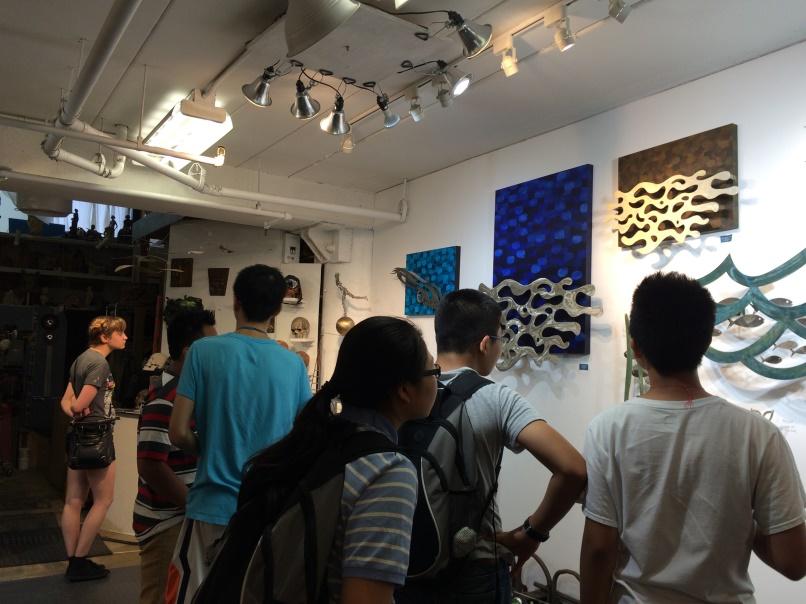
In addition to helping younger youth this summer, the AALEAD program introduced me to resumes, cover letters, and elevator speeches. My high school peers and I also did career exploration which led us to explore different careers in the field of STEM (Science, Technology, Engineering, and Mathematics).  We focused on arts & technology, service & technology, and entrepreneurship & technology during our program.  This allowed me to visit many different places like Union Kitchen, Torpedo Factory, and Verizon to learn about career experiences and what a work place is like. I have learned many things this summer from how to develop an effective presentation and how to how to write a resume. 

If AALEAD didn’t have a summer program like this I wouldn’t have done anything with my summer. Memories would not be created for me, and I would not have gained anything from sitting at home and spending time on my electronic devices.  I am grateful for the experience of having been a part of the AALEAD summer program as not only a participant and an employee, but also as a leader.  
http://www.aalead.org/blog/wp-content/uploads/2015/07/18965364323_fb1f8bd155_o.jpg

DCAYA would like to thank Ellen for sharing her experience with AALEAD. If you'd like to learn more about the services and supports provided by AALEAD be sure to visit their homepage today!

Wednesday, June 19, 2013

Disengaged and Non-Traditional Learners Can Thrive Through Summer Learning

Little known fact: I didn’t actually learn to read until I was nine years old. A combination of what was then diagnosed as dyslexia, a phonetic processing disorder (I still for the life of me cannot distinguish vowel sounds with any accuracy) and frankly a unique learning style, all left me at a significant disadvantage. School was, needless to say, a very stressful place. Homework time could best be described as an outright battle of wills between me and my (in hindsight, highly patient) parents.

This reality completely influenced how I spent my summers. My parents realized early on that I could not afford to sit idle during the 8 weeks of summer. So, while other kids went to sleep away camp, traveled with their family or roamed the woods of Vermont, I was in tutoring. During the early years, it was with a reading specialist matched by additional spelling and math work with a teacher from my elementary school. To say I perfected the art of non-violent protest during these sessions is an understatement. I would sit in silence and refuse to acknowledge the presence of the tutor with the finesse of a practiced CIA agent under interrogation.[1] Growing up in a family on a limited income, wasting expensive tutoring sessions was an untenable proposition for my parents.

That’s when they got creative (possibly manipulative). During the third grade I had heard about a local theater camp organized by a group of high school teachers for elementary and middle school aged students. I was enthralled until my mother gently pointed out it would be fairly difficult to participate if I couldn’t read the script. So, we struck a bargain. I could go to KidShow so long as I also participated in tutoring.

In an act of sheer brilliance, my parents found a summer opportunity that incentivized the horrific tutoring sessions and ensured that I practiced reading without the battles that had defined previous summers.  

The creativity my parents employed is a powerful parable. Did I need and benefit from the academic tutoring? Without question. But it was in KidShow that I thrived. For the first few summers, I remember re-reading the plays over and over again, practicing every word and eventually, sentences for hours. By the third summer, when my reading had improved and I had a speaking role, I began to learn memorization techniques and started to appreciate how the rules of grammar create the cadence of language: That a comma or semi-colon required a dramatic pause, or that an exclamation point suggested excitement or perhaps fear in the delivery of a line. KidShow not only gave me a reason to practice reading, it made it fun. It helped me discover learning strategies I still utilize today, and it built my confidence and willingness to keep trying even when faced with difficult and seemingly insurmountable tasks.

That’s the beauty of smart summer learning opportunities. Enrichment activities that blend in academic skills that can engage non-traditional learners and provide them the space to shine are priceless. They can give real world applicability to what seem – to many children and adolescents- to be entirely esoteric academic concepts. Physics takes on whole new levels of importance when learning to sail. Chemistry and fractions can come to life in cooking classes. Good artists understand not only color theory, but geometry.

All children, but especially disengaged or non-traditional learners deserve the chance to discover what I did over those 6 summers: That learning can be fun and that I can be good at it.  

(Maggie Riden, who now consumes books of all types with complete abandon, calls her parents at least twice a year to thank them for their patience and to apologize for 8 years of tears, tantrums and outright rebellion over school and homework. She would also like to note that her parent’s creativity didn’t end with school. Ask her how her parents broke the door slamming habit that emerged during her obnoxious high school years and how they dealt with epic sibling battles. Sheer brilliance.)


[1] Brief aside: If you believe my mother/the editorial fact checker of this blog post, I actually made a special education student teacher cry when I was in 6th grade. I was stubborn- this was no shock. It wouldn’t have been so embarrassing (for her, and frankly my Mother) except that she and my Mom were in the same Speech and Language Graduate Program. Apparently this made for some awkward lecture hall discussions. 


Maggie Riden is the Executive Director of DC Alliance of Youth Advocates and has luckily grown out of her sleeping bag moth costume. She also no longer makes teachers cry. To stay updated on youth issues in D.C. you can FOLLOW us on Twitter, LIKE us on Facebook, and VISIT us at www.dc-aya.org. 

Wednesday, June 12, 2013

Summers Can Change the Way We Think About School

Many of the experiences I had as a teenager affected the person I am today, but when I question which experience I had is most closely tied to what I am doing now, the answer is undoubtedly summer camp, which for me was really more like summer school. My first experience with "summer school" was the day after my 8th grade graduation when I left the suburbs of NYC to spend my summer in rural New Jersey. It was during this time that I was able to begin my study of international affairs, a subject not offered at my public high school, but that I thought would be interesting.

This "summer school" experience allowed me to spend three summers studying international affairs at different universities and as direct result of that experience I am now continuing this academic pursuit in college. This occurred for two main reasons. First off, my summers exposed me to interesting and new subject matter that was not offered during the school year. The public school curriculum in New York State focuses on core topics like English and Math, but unfortunately does not leave much room for topics like international studies or foreign affairs. So the fact that taking classes over the summer allowed me to explore this area was incredibly valuable. This experience also exposed me to different styles of teaching and learning that changed the way I looked at academic coursework on the whole which I found to be useful throughout my academic endeavors.

Secondly, my summers profoundly affected my worldview. For one of the first times in my life, I had the opportunity to study with students from a variety of different cultures and backgrounds. This exposure shifted my perceptions and re-shaped past misconceptions I had held as a result of growing up in a smaller suburban area. I found this experience to be enlightening in a way that few other experiences are and I consider this kind of exposure to be of the utmost importance to the social and emotional development of a young person.

Here at DCAYA, I am excited to be researching and reporting on new and existing educational and enrichment models like many of the Expanded Learning models we highlight. These models and the different programs that utilize them are imperative for developing well rounded students that can do more than the minimal coursework required for graduation. With these types of programs students can do what I did and follow their unique interests (which may or may not be covered during a traditional school day or year) while also discovering potentially new interests along the way. Without this opportunity, I may have never realized my full potential, or pursued international affairs in college. Through expanded learning opportunities, students learn how to go beyond the school day and see opportunities for learning all around them.


Lauren Batten is the summer intern at DCAYA where she is assisting in the organization's Expanded Learning work. Lauren is originally from Westchester County, New York and is a rising junior at the George Washington University.


To read more about youth issues in DC you can FOLLOW us on Twitter, LIKE us on Facebook and VISIT us at www.dc-aya.org.  

Wednesday, May 29, 2013

I'm a Good Neighbor

Smith Mountain Lake, Virginia is a prime destination spot for any city dweller wishing to experience the calming atmosphere of fresh water and crisp mountain air. In fact, many affluent DC residents choose to retire in this lake side community only four hours from the city, where traveling by boat is quicker than driving around the nearly 500 mile shoreline. However, the picturesque nature of this vacation spot grows dim mere miles inland from the shore. In the nearby schools, over 70% of the students are on free or reduced lunches and rural poverty can be seen within miles of a lakeside mansion. In 2009, during the summer of my sophomore year in college, I interned for a start-up non-profit initially created to remedy the summer feeding gap for local children. Through the summers, this simple idea grew and expanded into a summer enrichment program serving hundreds of children and bonding together two fiscally diverse populations into a symbiotic community.

Since living in D.C. and working with DCAYA on issues such as expanded learning and summer programming, I have realized that rural and urban poverty may look different on the surface, but in reality share many attributes. One of the most ambitious and successful programs of the SML Good Neighbors Day Camp is Reading Buddies, where a member of the community sits and reads with a child every day for 30 minutes. In the 2010 Assessment Report, SML Good Neighbors found that 88% of the children who participated in the summer enrichment program either maintained or improved their reading scores over the summer. The District has many non-profits that utilize a similar strategy to prevent the summer slide, which researchers have proven most negatively affects low income children. D.C. is also ranked number one in the country for best summer feeding program. Showing summer programming enriches both the minds and bodies of our neighborhood children.

The three summers I spent interning for SML Good Neighbors reinforces my passionate stance for quality summer programming. Just because school lets out for the summer does not mean children’s brains should shut down for three long months. At the same time, summer should be fun. Summer enrichment programs are the best way to provide necessary services such as nutritional meals and educational programming to children in a positive, socially enriching and engaging way so they may grow into productive adults.

The slogan “I’m a Good Neighbor” is displayed on the back of each campers t-shirt. All children need quality, year round supports no matter their family’s income level or geographic location. With summer around the corner, we can all be Good Neighbors by supporting our local summer enrichment programs.

To learn more about SML Good neighbors visit their website or watch this short video about the day camp.

Find a summer enrichment program in D.C. through The Bridge Project DC website. To find a summer feeding program in the District, DC Hunger Solutions provides an easy to use Google map.

Angela Massino is the communications associate at DCAYA. If you would like to stay current on youth issues in the District FOLLOW us on Twitter, LIKE us on Facebook and check out our website www.dc-aya.org