Showing posts with label afterschool program. Show all posts

Wednesday, August 05, 2015

Making the Most of My Summer with AALEAD!

This blog post was written by a District of Columbia youth, Ellen, who has been an active participant with Asian American LEAD for over ten years.  Asian American LEAD (AALEAD) is a regional non-profit organization that supports low-income and under-served Asian Pacific American youth with educational empowerment, identity development and leadership opportunities through after school, summer, and mentoring programs.  Ellen is a rising 10th grade student at School Without Walls High School in Washington, D.C.  

While many other youth around the nation are spending their summer break enjoying activities such as swimming, vacationing, attending camps, visiting relatives, or playing sports with their friends, I have chosen to spend my summer working for an organization that is very important to me, called Asian American LEAD.  Many times people ask me, “What does AALEAD mean to you?” I often reply that AALEAD is like my second family. From the time that I started participating in AALEAD in kindergarten until high school, I have had many experiences with AALEAD that have helped shape me into who I am today. There have been a lot of inspirational figures in AALEAD who have left a mark in my life.  They have also inspired me to do the same for my fellow AALEADers.
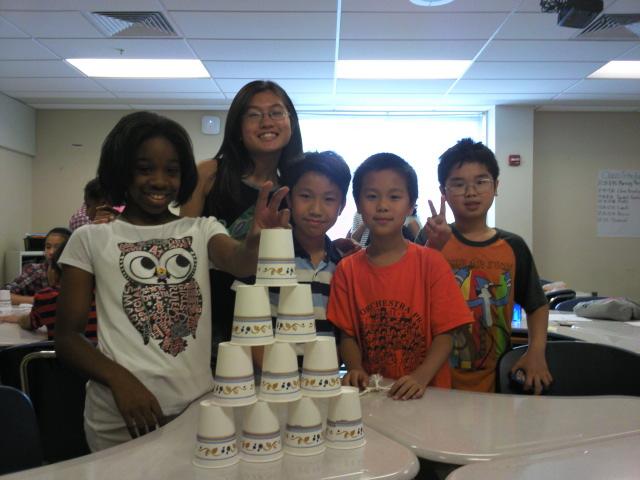
C:\Users\郭津津(Ellen Guo)\Pictures\AALEAD\Photo0501.jpgThis brings me to the topic of this summer and why I decided to work with AALEAD. The primary reason is that I want to help younger youth in the program and provide them with opportunities similar to what I had when I was their age. Going through my childhood memories, one of the most delightful and inspirational memories I had was spending time with the high school students in AALEAD.  While I was in elementary school, I took advantage of the many workshops and activities the high school students led for me, which I always found to be very fun and engaging.  


I personally think this summer program has been a great advantage for the younger youth in AALEAD because although I had experience with high school youth and their workshops, they didn’t cover the topic of transition from elementary school to middle school. As the oldest sibling in my family of three children, I wish I had people who went through the experience before me who could tell me what to expect. Since I wasn’t able to get this knowledge when I was transitioning from elementary school, I wanted to give back to those after me so that they could have this type of benefit.
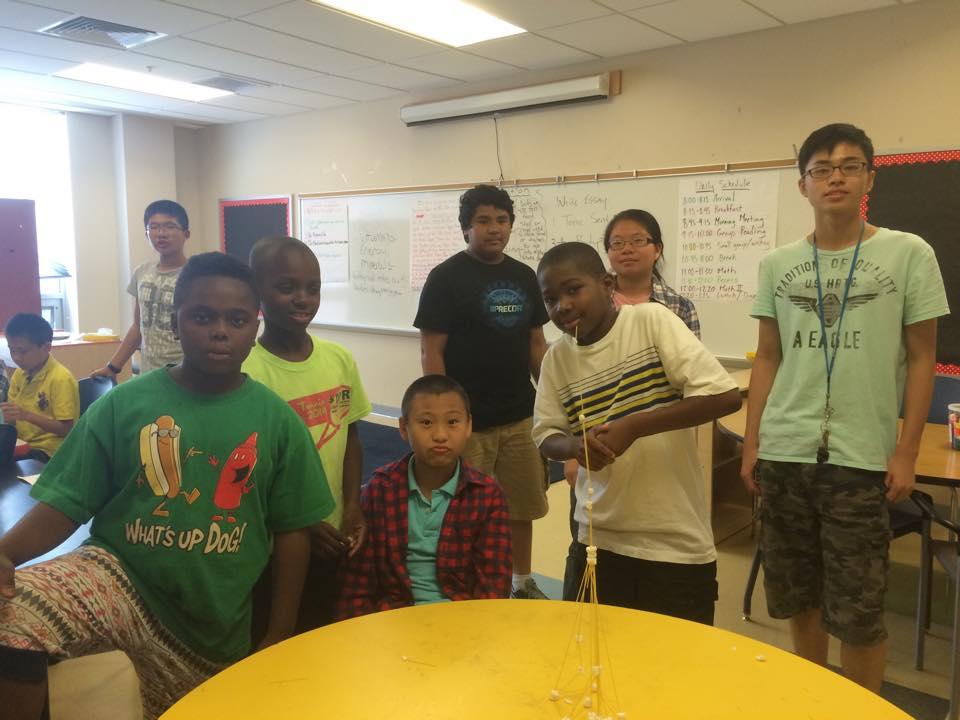
C:\Users\郭津津(Ellen Guo)\Pictures\AALEAD\11741805_481951398652961_1775622246_n.jpgNot only was this summer program a great benefit for the elementary school youth, I also gained something from the experiences that I had leading workshops. I gained memories with the youth that will last a lifetime, and I have also improved upon my leadership skills. Before this summer, I was the quiet and reserved person who was always sitting in the darkest corner of the room and never eager to get out of my own comfort zone. However after this summer, I was able to find leadership skills in me that I never thought I had. Now, I am more open and comfortable talking to people I just met.

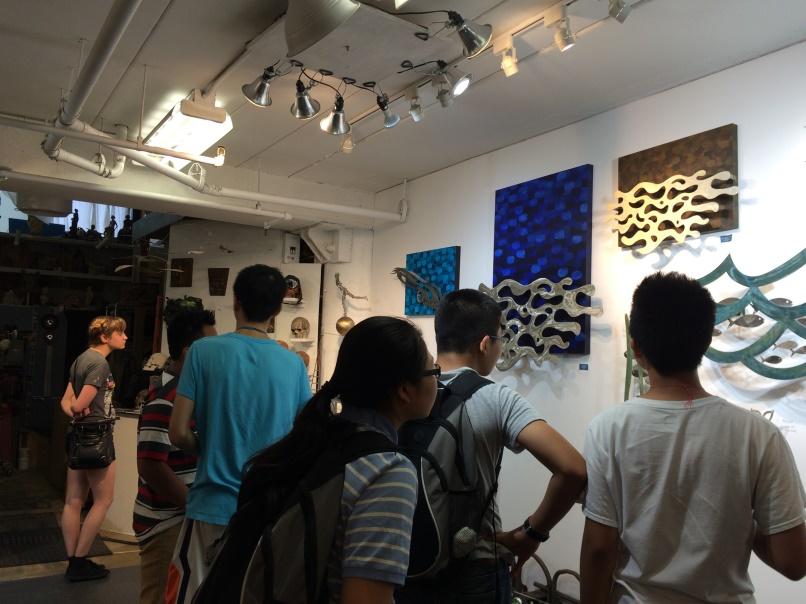
In addition to helping younger youth this summer, the AALEAD program introduced me to resumes, cover letters, and elevator speeches. My high school peers and I also did career exploration which led us to explore different careers in the field of STEM (Science, Technology, Engineering, and Mathematics).  We focused on arts & technology, service & technology, and entrepreneurship & technology during our program.  This allowed me to visit many different places like Union Kitchen, Torpedo Factory, and Verizon to learn about career experiences and what a work place is like. I have learned many things this summer from how to develop an effective presentation and how to how to write a resume. 

If AALEAD didn’t have a summer program like this I wouldn’t have done anything with my summer. Memories would not be created for me, and I would not have gained anything from sitting at home and spending time on my electronic devices.  I am grateful for the experience of having been a part of the AALEAD summer program as not only a participant and an employee, but also as a leader.  
http://www.aalead.org/blog/wp-content/uploads/2015/07/18965364323_fb1f8bd155_o.jpg

DCAYA would like to thank Ellen for sharing her experience with AALEAD. If you'd like to learn more about the services and supports provided by AALEAD be sure to visit their homepage today!

Wednesday, April 29, 2015

Face the Truth: DC Trust Budget Reduction will Hurt 2,391 Students

In past blogs, DCAYA has talked a lot about the DCPS afterschool budget cut and the effect it will have on the afterschool infrastructure by laying off 25 DCPS-OSTP coordinators.

Read more about the DCPS budget cut: Budget Cuts to DC Afterschool Programs

Sadly, the damage to afterschool programming doesn’t stop there. The DC Trust did not receive $2.5 million for their afterschool grants in the proposed FY16 budget. These afterschool grants support 78 youth-serving organizations across the District. Programs like DC SCORES, Higher Achievement, and Words, Beats, & Life, Inc., are just a few DC Trust grantees who will lose funding if the $2.5 million is not restored.

The impact these organizations’ have on a students’ development goes beyond just words. View the faces of the children and youth who may lose their favorite afterschool programs if funding is not restored and sustained for future budget cycles.

Wednesday, March 25, 2015

Afterschool Programs For The Win!

In DC, 35% of children and youth participate in afterschool programs, while 66% would participate if a program was available. This week, we have a special guest blog from WNBA assistant couch Eric Thibault who witnesses firsthand the transformative power of sports on a young person's social, mental, and physical development. Eric is a DCAYA "Afterschool Champ" for his advocacy in expanding access to afterschool sports programs for DC girls.

The blog 'tips off' DCAYA's eBay auction for the "Ivory Latta Experience". The highest bidder will practice their backswing with basketball star Ivory Latta at the Top Golf  driving range. Along with spending quality one-on-one time with a WNBA athlete, the lucky winner will receive a signed Latta jersey and mini basketball. All proceeds will go toward DCAYA's work in expanding access to quality afterschool and summer programs for all District youth. 

Enter Your Bid for the "Ivory Latta Experience"

motionmailapp.com 

As an assistant coach for the WNBA’s Washington Mystics, I’m very lucky to have sports pay the bills. But before basketball was ever my profession, it was what I looked forward to every day: at recess, on Saturday mornings, and after school let out in the afternoon. While basketball has stuck with me and become a central part of my life, it was never the only after-school activity to grab my attention. Baseball, soccer, tennis, golf, band, creative writing, math club – I can point to each of these experiences as having a key part to play in my social, mental, and physical development.

Learning to be a valuable part of a team is an essential and irreplaceable component of growing up, and one that is most readily accomplished through sports. Among countless other lessons, playing sports taught me how to handle winning and losing, to pursue and achieve both personal and group goals, to relate to others with different backgrounds, viewpoints and abilities than myself, to sacrifice for the good of a group, and how to handle myself in pressure-filled situations. When I was in graduate school, a classmate expressed frustration with one of our sports management group projects. Our professor, with a laugh but clearly not joking, told him to “get used to it – life is a long string of group projects.” The professor was completely right; whether you are a coach, a teacher, a chemist, a musician, an administrator, or a politician, there’s no substitute for learning how to interact and succeed within a group of varying opinions and attributes. Almost without fail, the people in that class that grew up playing team sports adapted more quickly to the tasks at hand than those who lacked that experience.

In a more immediate sense, after-school activities directly improve the quality of life for kids. Sports help with nutrition and combat obesity, a growing problem in our country. Art and music are backed by endless amounts of research that indicates they improve academic performance. After-school programs of all kinds can help keep kids living in high-crime or poverty-stricken areas from falling into more dangerous situations. On a personal level, I know I learned arithmetic from studying basketball stat sheets and understood geometry more easily with the help of passing angles. Understanding how to curve a golf shot went hand in hand with physics class. Playing the drums in the band showed me the importance of getting on the same page with my peers in those interminable group projects.

Above all, the part of my sports experience for which I’m most grateful was the opportunity to establish relationships with people I would not otherwise have befriended. When I was 13 years old and in middle school (a mostly-white, upper-middle class middle school), I played on a predominantly black basketball team. Some players came from money, some did not. Some had two parents at home, some had one, some had none. The thing that we all had in common was a love for basketball, and that bridge allowed us to move past any awkwardness and get to know each other as individual human beings. When you get to spend that quality time around people from different backgrounds, it shapes how you see the world. You start to see the world in shades of gray, and move away from lazy stereotypes. It’s one thing for your parents to explain tolerance, it’s another to learn it on a day-to-day basis. I have no doubt that our society would be a more accepting place if more people had similar opportunities at age 13, or younger. Being part of a sports team, school band, or debate club offers an environment where that becomes a natural consequence, where kids develop attitudes and habits that will serve them well for the rest of their lives.


Who's your #AfterschoolChamp? Tell us on Twitter from March 25 - April 1 for a chance to win a "DCAYA Afterschool Champ Badge"!


To read more about youth issues in DC you can FOLLOW us on Twitter, LIKE us on Facebook and VISIT us at www.dc-aya.org.

Friday, March 06, 2015

Expanding Our Approach to Education

Photo Courtesy of Beacon House
Education is a top issue in DC. There are constant debates around truancy, graduation rates, charter schools, credit attainment, assessment scores, teacher supports, community involvement, student engagement, and the list goes on. DCAYA focuses on one educational topic at the heart of these debates: Expanded Learning.

To give context, the Expanded Learning Model adds time to the school day by partnering schools with community-based providers (CBOs). These partnerships enhance the curriculum by bringing enrichment activities, led by CBOs, into the classroom to compliment the traditional school subjects taught by teachers. The partnership also allows teachers to spend more time planning the curriculum and engaging in professional development opportunities, while CBOs are working in the classroom with the students. DCAYA supports this model because it is a win-win situation for everyone: CBOs enhance the school climate, students are offered personalized and hands-on learning experiences, and teachers have extra time to plan and grade work without feeling overwhelmed and/or burnt out by the longer school day.

See all of the benefits of an Expanded Learning Model in DCAYA’s latest one-pager:


So what would it take for DC to adopt the Expanded Learning Model?

DC currently has certain pieces in place to smoothly transition schools into an Expanded Learning framework: a high-concentration of quality community-based providers, extended days for certain schools, and the infrastructure to facilitate community collaboration. In fact, DC already has an example of a functioning and thriving Expanded Learning Model at Kelly Miller Middle School through their partnership with Higher Achievement.

However, in order for DC to scale the model responsibly and successfully, District-wide data must be collected on afterschool and summer programming to fully understand the landscape. Both the Children and Youth Investment Trust Corporation (DC Trust) and DC Public Schools (DCPS) are in a position to collaborate and gather such data, which would allow the District to begin building a strategy to connect schools with CBOs. The data would also be used to assess students current limitations and access to afterschool and summer programming and ensure that at-risk students are receiving ample educational supports.

To further understand the Expanded Learning Model and DCAYA’s 2015 policy asks, be sure to read the one-pager and reach out to our policy analyst Katie Dunn at katie@dc-aya.org for more information on testifying at DC Council hearings.


In addition to educating the public and policymakers about the benefits of an Expanded Learning Model, DCAYA is also advocating to protect current afterschool and summer programming. In the coming weeks, look out for another #LightsOnAfterschool social media campaign to ensure that Trust grantees receive full funding for their summer programs. 


To read more about youth issues in DC you can FOLLOW us on Twitter, LIKE us on Facebook and VISIT us at www.dc-aya.org.