Showing posts with label career pathways. Show all posts

Wednesday, September 28, 2016

Promising Practices in Work-Based Learning

Today's blog previews a new paper from the National Skills Coalition and the National Youth Employment Coalition on the promising practices in extending work based learning models to youth populations. You can find the full report, Promising Practices in Work-Based Learning for Youth, here!


As the U.S. labor market recovers from the Great Recession, businesses are hiring new workers and taking advantage of emerging opportunities. In fact, the unemployment rate is below five percent for the first time since 2007. Unfortunately, young workers are not benefitting from the improved economy at the same rate as the overall workforce.

People between the ages of 20-24 are unemployed at a rate nearly double the national average and the jobless rate for those between the ages of 16-19 is nearly triple the national rate. Disconnected and at-risk youth have more difficulty finding employment, earn less throughout their career, are more likely to be incarcerated, and are more likely to be young parents than their peers who are in school or working. Youth unemployment also leads to lost income tax revenue, a greater burden on safety net programs, and increased expenses associated with higher crime levels. Connecting these younger populations to high-quality employment and training opportunities is critical to ensure that the next generation of workers can access the same economic opportunities as generations before.

Wednesday, August 05, 2015

Making the Most of My Summer with AALEAD!

This blog post was written by a District of Columbia youth, Ellen, who has been an active participant with Asian American LEAD for over ten years.  Asian American LEAD (AALEAD) is a regional non-profit organization that supports low-income and under-served Asian Pacific American youth with educational empowerment, identity development and leadership opportunities through after school, summer, and mentoring programs.  Ellen is a rising 10th grade student at School Without Walls High School in Washington, D.C.  

While many other youth around the nation are spending their summer break enjoying activities such as swimming, vacationing, attending camps, visiting relatives, or playing sports with their friends, I have chosen to spend my summer working for an organization that is very important to me, called Asian American LEAD.  Many times people ask me, “What does AALEAD mean to you?” I often reply that AALEAD is like my second family. From the time that I started participating in AALEAD in kindergarten until high school, I have had many experiences with AALEAD that have helped shape me into who I am today. There have been a lot of inspirational figures in AALEAD who have left a mark in my life.  They have also inspired me to do the same for my fellow AALEADers.
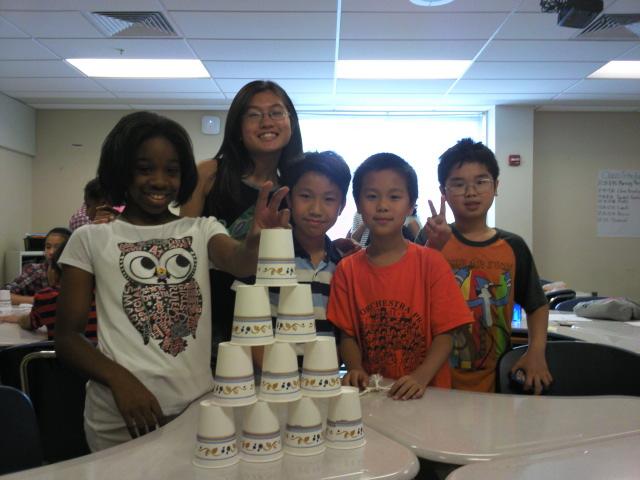
C:\Users\郭津津(Ellen Guo)\Pictures\AALEAD\Photo0501.jpgThis brings me to the topic of this summer and why I decided to work with AALEAD. The primary reason is that I want to help younger youth in the program and provide them with opportunities similar to what I had when I was their age. Going through my childhood memories, one of the most delightful and inspirational memories I had was spending time with the high school students in AALEAD.  While I was in elementary school, I took advantage of the many workshops and activities the high school students led for me, which I always found to be very fun and engaging.  


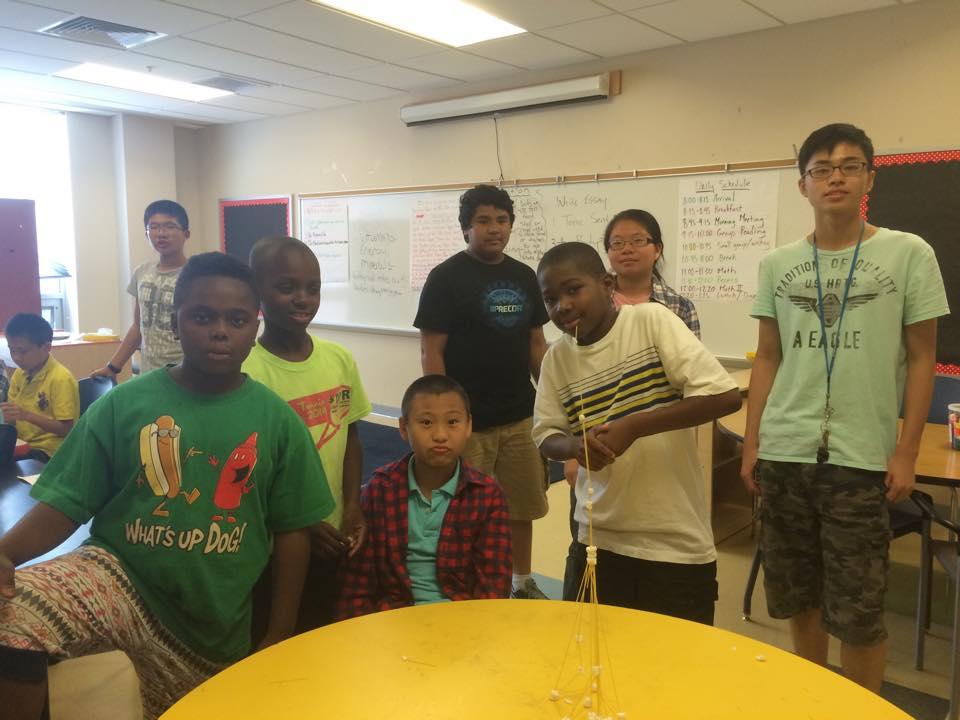
I personally think this summer program has been a great advantage for the younger youth in AALEAD because although I had experience with high school youth and their workshops, they didn’t cover the topic of transition from elementary school to middle school. As the oldest sibling in my family of three children, I wish I had people who went through the experience before me who could tell me what to expect. Since I wasn’t able to get this knowledge when I was transitioning from elementary school, I wanted to give back to those after me so that they could have this type of benefit.

C:\Users\郭津津(Ellen Guo)\Pictures\AALEAD\11741805_481951398652961_1775622246_n.jpgNot only was this summer program a great benefit for the elementary school youth, I also gained something from the experiences that I had leading workshops. I gained memories with the youth that will last a lifetime, and I have also improved upon my leadership skills. Before this summer, I was the quiet and reserved person who was always sitting in the darkest corner of the room and never eager to get out of my own comfort zone. However after this summer, I was able to find leadership skills in me that I never thought I had. Now, I am more open and comfortable talking to people I just met.

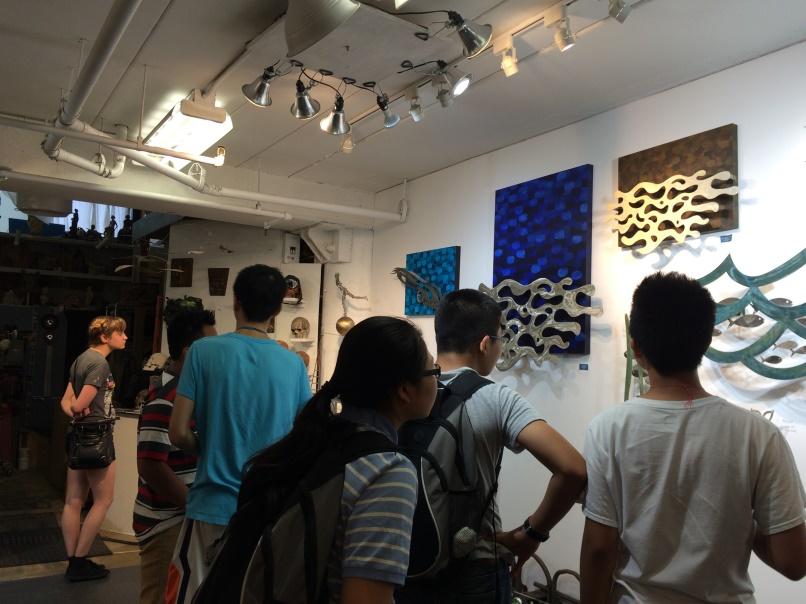
In addition to helping younger youth this summer, the AALEAD program introduced me to resumes, cover letters, and elevator speeches. My high school peers and I also did career exploration which led us to explore different careers in the field of STEM (Science, Technology, Engineering, and Mathematics).  We focused on arts & technology, service & technology, and entrepreneurship & technology during our program.  This allowed me to visit many different places like Union Kitchen, Torpedo Factory, and Verizon to learn about career experiences and what a work place is like. I have learned many things this summer from how to develop an effective presentation and how to how to write a resume. 

If AALEAD didn’t have a summer program like this I wouldn’t have done anything with my summer. Memories would not be created for me, and I would not have gained anything from sitting at home and spending time on my electronic devices.  I am grateful for the experience of having been a part of the AALEAD summer program as not only a participant and an employee, but also as a leader.  
http://www.aalead.org/blog/wp-content/uploads/2015/07/18965364323_fb1f8bd155_o.jpg

DCAYA would like to thank Ellen for sharing her experience with AALEAD. If you'd like to learn more about the services and supports provided by AALEAD be sure to visit their homepage today!

Wednesday, February 04, 2015

Creating Career Pathways for DC Youth

Guest blogger Martha Ross is a fellow at the Brookings Metropolitan Policy Program whose work focuses on education, training, and the labor market. 

This week, Martha highlights recommendations from a recently released report “Improving Youth Programs and Outcomes in Washington, D.C.”.


No one is satisfied with the educational and employment outcomes of District youth, nor should they be. Consider a few data points: 

  • Unemployment rates skyrocketed during the recession and have yet to recover, disproportionately affecting younger workers. In 2013, unemployment among teens aged 16-19 in the District stood at 34%. Among young adults aged 20-24 it was 12.3%, and among the total population it was 8.6%. 
  • Only about two-thirds of public high school students graduate in four years. 
  • Unacceptably large numbers of low-income young people with lower levels of education—about 8,300, or 9% of all young people aged 16 to 24—are “disconnected,” meaning they are neither in school nor employed. 

So what should we do? In a recent report I co-authored with Mala B. Thakur, Improving Youth Programs and Outcomes in Washington, D.C., I outline two areas for action. 

1.) Programs serving youth should use data to measure their progress towards reaching their goals.
This practice would help young people increase their skills, educational credentials, and employment outcomes.  This sounds almost laughably commonsensical but it’s harder to do than it sounds.  Most organizations serving youth are well aware of the power of data, but on any given day, data-related tasks are vulnerable to being outranked by more immediate priorities. Organizations can find it difficult to direct resources toward data and evaluation, since it usually directly competes with service delivery. 
One concrete step would be for funders to support a community of practice for service providers to improve their use of data for learning, self-evaluation, and ongoing improvement.  A community of practice is a learning partnership among people who find it useful to learn from and with each other about a particular topic.  In this case, members would be helping each other “get better at getting better.” 


2.) Use a career pathways framework to build a more coherent youth employment system. 
A career pathway provides progressive levels of education, training, and support services to prepare people for employment and career advancement. As defined by the Center for Law and Social Policy, career pathways incorporate three features: a) multiple entry points, both for the well-prepared and those with limited skills, b) well-connected education, training, and support services within specific occupational or industry-based career opportunities, and c) multiple exit points at successively higher levels of skills or more senior employment opportunities.

This recommendation focuses on improving how different organizations (adult education, K-12, community college, nonprofits) interact with each other to provide a structured sequence of education, training and other services. That’s why a task force or collaborative effort led by such entities as RAISE DC, the Workforce Investment Council, and the Office of the State Superintendent of Education could be the appropriate vehicle to lead this effort.


Essential Features of a Career Pathway System

Source:  CLASP, “Shared Vision, Strong Systems:  The Alliance for Quality Career Pathways Framework Version 1.0” (2014)

In conclusion:  The status quo demands a continuous and targeted focus on quality improvement and system-building.  Too few young people in DC meet key educational and employment milestones in the transition to adulthood. We can do better.


DCAYA would like to thank Martha Ross for contributing to our weekly blog, as well as her valuable research towards improving outcomes for District youth.


For more on youth issues in DC you can FOLLOW us on Twitter, LIKE us on Facebook,SUBSCRIBE to this blog and VISIT us at www.dc-aya.org.