Showing posts with label WIOA. Show all posts

Thursday, June 08, 2017

Big Wins for Youth and Families in the FY18 Budget

The second FY18 budget vote will occur on June 13th at 11am (watch here: http://dccouncil.us/videos), and the final legislative vote will follow shortly after. But in the meantime, we wanted to share the progress we’ve made in elevating the needs of the District’s youth and families through the Council’s first vote.

To highlight the fruits of your labor throughout this budget season, read on for more about the Council’s budget decisions impacting our four issue areas: Expanded Learning, Disconnected Youth, Youth Homelessness, and Youth Workforce Development. 
Expanded Learning: $4.9 Million to OST*
Office of Youth Outcomes (Deputy Mayor for Education): While significant progress has been made to build the new Office of Youth Outcomes on a solid foundation, the Committee on Education maintained flat funding at $4.9 million for community-based afterschool opportunities for District youth. In this budget season, the Committee on Education prioritized identifying funds to reach the recommended increase of 3.5% in per-pupil funding, yet *Chairman David Grosso did commit to allocate an additional $2 million to the OST system in the likely chance of a budget surplus this summer. As the system continues to strengthen, DCAYA is committed to restoring OST funds to the historic $10 million mark to ensure demand for these critical youth development programs are met.

Thursday, March 31, 2016

FY2017 Budget Asks

Today’s blog comes to you as the first installment in our team’s analysis of Mayor Bowser’s proposed DC Budget for 2017. The Mayor’s proposal is now before Council where, through upcoming budget hearings and advocacy meetings, it will be debated and revised by Council Committees before it goes to a vote in May.

In the next few weeks, we'll be providing a deeper dive into each of our budget asks. We encourage you to follow along with our budget asks and talking points, and then join us at the Wilson Building to testify about your particular concerns at DC Council budget hearings.

Transportation Support - $950,000 (Not included in the Mayor’s proposed FY17 budget)

As we highlighted last year, the cost of transportation continues to be a pervasive barrier to the success of older youth (22-24) in re-engaging and maintaining engagement in educational opportunities. Unlike their younger colleagues (ages 5-21), who have access to the Mayor’s signature Kids Ride Free program, older youth must rely on their own, often limited, incomes or the support of their LEAs and programs to cover the cost of transportation. 


Earlier this year, DCAYA conducted a survey in collaboration with Raise DC’s Disconnected Youth Change Network (DYCN), and found that 54% of respondents 22-24 reported spending over $30 a week or $120 a month travelling to and from their programs. Additionally, over half of the older youth surveyed reported spending 45% or more of their weekly income getting to and from their educational programs. 83% of these youth reported spending around one-fifth or more of their weekly income getting to and from their programs; notably 55% of youth spending this much live in Wards 5, 7, and 8. 

An additional investment of $950,000 would ensure that these youth who have overcome multiple barriers to re-engage in their education at a Local Education Agency (LEA) would be able to attend school without the persistent worry of how they will afford to get there. To include the full breadth of youth pursuing their high school diploma or equivalent through District-funded schools (LEAs) and GED programs (CBOs), a total investment of $2.2 million is necessary.

Expanded Learning - $10 million ($4.9 million allocated in the Mayor’s proposed FY17 budget)

The mayor’s proposed budget includes an allocation of $4.9 million to the DC Trust in FY2017, including afterschool and summer community-based programming. As initial allocations go, this is the strongest we’ve seen in years, and when mid-year reprogrammed funds are included, about steady with what overall out-of-school time (OST) grants over the course of fiscal years have been. While encouraging, we see this investment as a glass “half full”.

The DC Trust’s annual share of funding for OST is a direct reflection of the value we as a District place on our kids in the hours after school and in the summer, and that share has declined by more than half from 2010 to the present year, resulting in only a quarter of the locally-funded slots for afterschool and summer learning that were there for kids just six years ago:


If we are serious about providing safe, youth-friendly opportunities focused on improving outcomes and quality of life for all our children now and in future, we must reverse these trends. With a $10 million allocation to the DC Trust for OST programming in FY2017, and a commitment from leaders to the development of a dedicated funding stream, we would be back on track to serve up to four times as many children and youth with quality expanded learning opportunities.

Educational Data Capacity - Maintain the $1.1 million allocated in the Mayor’s proposed FY17 budget

We greatly appreciate that the mayor’s proposed budget includes $1.1 million to keep DC’s Statewide Longitudinal Education Data System (better known as the SLED database) stable and fully staffed. SLED has been a critical tool in transforming the District’s approach to decision-making in education. While SLED on its own is a reliable and useful data warehouse, because of partnerships like those with the college access providers, OSSE staff have already started taking SLED’s utility to the next level – namely, to reach more audiences of education data consumers to create user-friendly tools for more networks and to support the use of SLED for data-driven decision making at all levels.

In addition to the important education research underway hinging on the availability and analysis of data from SLED, it’s also important to note that SLED plays a critical role in the development of a comprehensive and coordinated workforce development system. The District’s Draft WIOA State Plan outlines plans to create a uniform system of intake, assessment, and referrals that is predicated on the maintenance of SLED. As the District moves towards a career pathways approach to workforce development, it’s critical that data on a resident’s educational and workforce experience can be shared across systems and, eventually, be made accessible to providers to streamline the eligibility and assessment processes. As other agencies look to build out on the success of the District’s education database, maintaining staffing levels and quality within the SLED team is key.   We encourage Council to hold this investment stable and ensure full operational capacity of SLED in the years to come. 

Youth Workforce Development - $870,000-$1,000,000 (Maintain FY16 expenditures for in-school youth programming; the baseline amount is still being clarified)

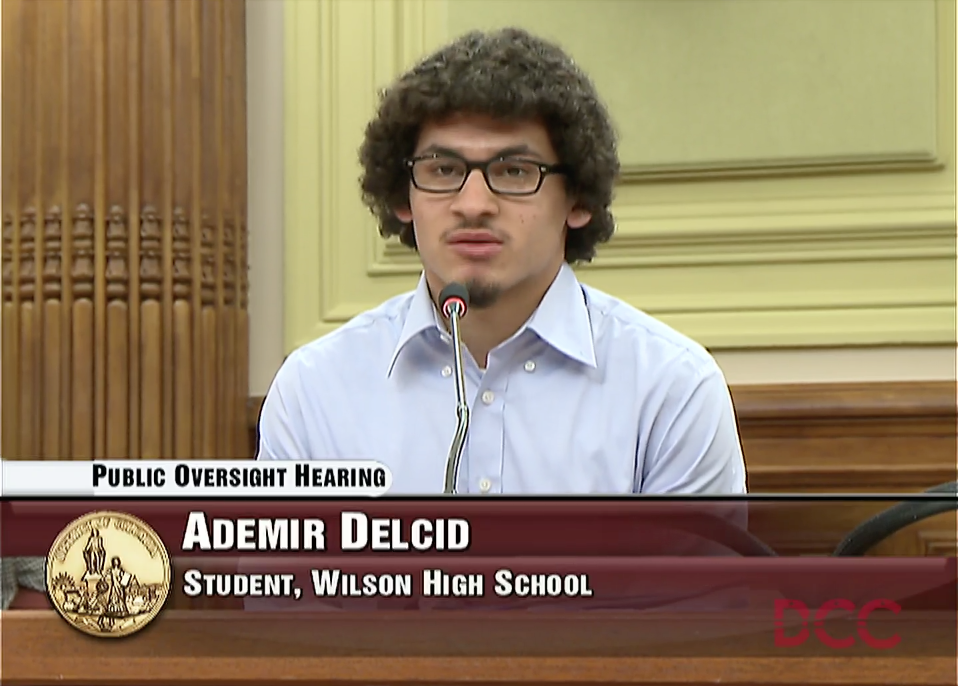
As Latin American Youth Center youth Ademir Delcid shared with us a few weeks back, maintaining school-based workforce development programming is a critical component of the District’s youth workforce development system. Through academic enrichment, exposing youth to work readiness skills, and offering project-based learning, in school youth programming provides workforce development to students to help keep them engaged in high school and prepare them for successful postsecondary transitions.

Under WIOA, federal expenditures for in school programs will be reduced to a maximum of 25% of the District’s total federal allocation of $2.3 million annually. At this funding mark, in school youth services would be significantly reduced. DC’s Draft WIOA State Plan includes a proposed strategy to blend the District’s reduced in school allocation with funding that flows through the Rehabilitation Services Administration (RSA) to make all in school youth programs accessible to youth with disabilities. While this is an important step forward for the District in serving youth with disabilities, the capacity of the District's provider community to serve this population well is currently limited, and will require investments in training and technical assistance.  DCAYA believes that current funding for in school programs should be maintained at $870,000, and additional funding should be allocated for capacity building within the District’s in school youth providers to ensure all DC youth have access to high quality and developmentally appropriate in school workforce training. 

Youth Homelessness - $800,000 (2.3 million is included in the Mayor’s proposed FY17 budget) 
(Corrected April 5, 2016. The DHS Budget book incorrectly stated the 2017 enhancement was $3.1 million.)

The mayor’s proposed budget includes $2.3 million in new funding for homeless youth services. Since the passage of the 2014 End Youth Homelessness Amendment Act, local funding for homeless youth services has remained at $1.3 million per year, which in 2014 represented just a 15% increase to homeless youth resources from the budget passed in the previous year. It was a modest increase given the mandates of the Act, but at the time, we still had incomplete data to quantify the actual need. With the start of the annual Homeless Youth Census, we now know more.

The census data makes clear that we’ll need to scale up prevention services in the year ahead, as well as add to our supply of crisis beds and transitional and independent living spaces for youth, if we are to get to the point that actual youth homelessness in the District becomes rare, brief and non-recurring by 2020. We applaud the mayor for recognizing this need and urge the council to adopt a budget that includes this important investment. There will be additional details on the DHS budget in the coming few weeks!


That's all for now! Check back next week for a closer look at our first budget ask: expanded access to transportation supports for re-engaging youth.

Wednesday, March 16, 2016

Youth Voice: Continue School-Based Workforce Development

This week we’re bringing you the testimony of Ademir Delcid, a student in LAYC’s Guide to Post Secondary (GPS) Program from last week’s performance oversight hearing (3/7) on DOES and the WIC. Currently supported by Workforce Innovation and Opportunity Act (WIOA) dollars, programs like GPS are facing significant funding shortfalls under the District’s Draft WIOA State Plan. A reduction in the federal allocation of in-school program funding, the District’s planned emphasis on increasing pre-employment supports specifically for youth with disabilities, and, most importantly, the lack of local dollars to supplement these programs could threaten their continuation. (More on these trends here.) Especially as the District moves towards the creation of a career pathways system, it’s critical to bolster programs like GPS that help youth transition into post secondary education and better jobs. We'll turn it to Ademir to explain why:

My name is Ademir Delcid, I am 18 years and a senior attending Woodrow Wilson Senior High School. I have been a part of The Latin American Youth Center (LAYC) Guide to Post Secondary (GPS) for the past two years. Being a part of LAYC has been a wonderful experience.

Through LAYC, I have improved academically and been given the opportunity to give back. In school, my progress is tracked so that I am passing my classes. If an assignment or anything is missing that may affect my grade, the advisors of LAYC at school make sure that I get the help to understand the lesson/homework through after school tutoring or personal help. I am also getting help with my essays and writing. If I have a writing assignment or college application, they make sure that it has been reviewed and corrected before submission. I have participated in community service events through LAYC. I attended the MLK Day of service and Martha's Table, each one allowing me to give back to those in need. I have also participated in dances that were hosted at LAYC and Wilson, both events allowing people to be entertained and enjoy themselves.

GPS has given me financial help and preparation for college. Being enrolled in the program, I have learned about FAFSA, what to look for in colleges, how to apply to scholarships and prepare for the SAT’s. I am also being paid in different ways, some being: taking the SAT, attendance, CASAS testing, and community service events. With the money I earned, I created a bank account that I have put my money on a debit card. With the help of my advisors I was taught how to save my money, in preparation for college, so that when I do attend college I will have saved up enough to pay for school related items or other needed things. Through GPS, I have applied to over 12 schools and 6 scholarships. I have learned a lot during my senior year and it has prepared me for college.

During my 2 years of being in LAYC, I got to meet a wonderful team of advisors. I was given the opportunity to work with Adriana, Scholastique, Ella, Diana, Alexis and Loren. Meeting them and talking with them made me realize that they knew what they wanted for us students, which was to succeed and be prepared for the next chapter in our lives. Being a senior, I do not have the opportunity to continue working with them, however all that they have done in the short amount of time were worth the little time. Overall what each and every individual in this program has helped not only me but other students achieve is the progression, impact and determination to succeed in and out of school. I have witnessed firsthand how my life has been impacted and I thank each and every member of LAYC GPS for their never ending spirit to see me and others be prepared for college and life. I see each and every individual that have worked with me as more than advisors, they are my family and LAYC is my home.

For more information on how to get involved in advocating for the continuation of in-school workforce development programs this budget season, check out our budget hearing schedule and testimony guide, or reach out to DCAYA's policy analyst, Amy Dudas, at amy@dc-aya.org.

Wednesday, February 24, 2016

I Would Wonk 500 Miles (Just to Share the WIOA State Plan with You)

Today’s blog will focus on the youth-specific provisions of the State Plan. We hope to be a resource as you develop your feedback and recommendations before the Plan is finalized and sent to DOL. For details on how to engage in State Plan Public Engagement, skip to the end!

Two weeks ago, Mayor Bowser and her workforce team released their draft of the District’s WIOA State Plan for comments before the Plan is sent to the Department of Labor (DOL) for approval by April 1st. Beyond demonstrating the District’s plans to comply with the Workforce Innovation and Opportunity Act (WIOA) to the Feds, the State Plan also sets the course to better align workforce stakeholders and programs to create a comprehensive system of workforce development.

In and of itself, WIOA established some significant changes for Title I Youth stakeholders, including:
  • Requires that at least 75% of youth formula funds are spent on serving out-of-school youth (up from 30% under WIA, though the District had been spending about 65% of funding on out-of school youth as of 2014[1])
  • Expands in-school youth eligibility to include low-income youth (14-21) who are English language learners and those who have a disability.
  • Requires that at least 20% of youth formula funds be spent on paid and unpaid work experiences that incorporate academic and occupational education.

Wednesday, November 11, 2015

A Bumpy Road to Self-Sustaining Employment: Paving the Way for Homeless Youth

As a continuation of our participation in Youth Homelessness Awareness Month, we'd like to take this week to highlight an important intersection of two of DCAYA's Issue Areas: Youth Homelessness and Youth Workforce Development. For many youth in the District and across the country, experiencing homelessness for short or extended periods of time can add significant barriers to their ability to connect to and thrive within workforce development programming. This week we're joined by guest blogger Amy Louttit from the National Network for Youth to elevate the challenges homeless youth experience in accessing workforce development opportunities and to highlight some areas of potential progress for this vulnerable population.

Barriers to Employment for Youth Experiencing Homelessness

The barriers that youth who are experiencing homelessness face when trying to access jobs and career pathways are diverse and profound. At the front end of the process to engage in the employment and workforce training necessary to be self-sufficient and seek affordable housing options, many of these youth lack the basic required documentation. A result of the transiency of their lives in general, as well as the fact that many of the minors do not have a parent or guardian to sign necessary documents, many homeless youth lack access to the social security cards, birth certificates and/or state issued identification cards needed to enroll in programs or complete required tax forms. While many of these documentation hurdles cannot be avoided (social security and identification verification are ubiquitously required to work), some programs have recently made it more difficult for youth experiencing homelessness to participate. For example, JobCorps recently reversed a long-standing policy that had allowed unaccompanied youth experiencing homelessness to participate without parental signatures. When we consider that Runaway and Homeless Youth programs are the best places to link disconnected youth to employment, it becomes imperative that we focus on minimizing documentation hurdles for youth who lack the stable relationships necessary to safely obtain such signatures and paperwork.

Other youth experiencing homelessness are able to access jobs, but lack the supportive services required to help them continue to develop the life skills needed to maintain employment. The cost of transportation, lack of mentoring support, and healthcare needs are frequently cited as barriers. Without including supports to counter these pervasive barriers to employment for youth experiencing homelessness, these young people are much less likely to sustain their engagement in workforce training or on-the-job experience. The detrimental effects are twofold. Youth are unable to stick with the programs or jobs that are providing them with much-needed experience, training, and income. And employers on the other end of the equation experience a confirmation of perceptions that youth employees lack the ability to demonstrate reliability, persistence, and work appropriate self-advocacy skills.

Areas of Workforce Access Opportunities for Homeless Youth

In July of 2014, President Obama signed the Workforce Innovation and Opportunity Act (WIOA) into law as part of a Federal effort to fill in the gaps youth face when navigating the workforce while gaining stability. This Act which governs programs such as JobCorps and other Youth Formula Funded programs attempts to encourage local labor to engage with "disconnected youth"-- those who are not enrolled in school and are disconnected from supportive services. In many instances, the disconnected youth population is currently experiencing homelessness or has in the past. 

The U.S. Department of Labor (DOL) recently collected public comments on regulations authorized by WIOA. While the Federal requirements were intentionally structured to minimize barriers to workforce and labor for unaccompanied youth experiencing homelessness, some local communities are prescribing higher barrier documentation and eligibility requirements. Youth experiencing homelessness up to 24 years of age are particularly in need of programs that aid them in identifying and training for a career pathway. 

The programs funded by the DOL under WIOA are built to achieve just this goal for disconnected youth. However, at the local level some communities have instituted such requirements as passing "entry exams" to these programs. Entry exams are usually used to assess a young person's literacy and numeracy skill levels, but they can often be used as cutoff points for program eligibility. For example, many programs will not accept students who cannot perform at 8th grade literacy and numeracy levels for fear that youth will not be able to efficiently perform necessary workplace duties. These entrance exam barriers are particularly troubling for unaccompanied youth experiencing homelessness because they are likely to change schools frequently. Such school mobility interrupts their education and often results in large gaps in their literacy and numeracy skills and often contributes to a young person's ability to persist through traditional pathways to high school completion. 

Understanding that delayed academic achievement is one of the underlying causes of youth disconnection, we must do better to incorporate basic skills education with workforce development training if we expect our disconnected youth to sustain engagement in school and work. Conversely, where these youth are unable to access WIOA programs, such as JobCorps, it is far more probable that they will be trapped in the cycle of poverty and homelessness due to lack of education and skills.

The Federal Government is making strides toward filling in gaps and reforming laws. Meanwhile, youth-serving organizations and their partners are capitalizing on opportunities to advocate for better policies and watching for the WIOA final rules to be published. In the interim, States are beginning to develop plans with their funding under WIOA and local partners should look for opportunities to educate local policymakers about the unique issues unaccompanied youth experiencing homelessness face. Together we can help to fill in these gaps and end the challenge of youth homelessness.

Amy Louttit is the Public Policy Associate at the National Network for Youth. We thank her for highlighting critical disconnections between the youth workforce development and youth homelessness fields. 

For more information on DCAYA's efforts to address the needs of homeless youth in DC, reach out to Senior Policy Analyst Joseph Gavrilovich (joseph@dc-aya.org).